
In the Indo-Pacific's new era -- where perception shapes reality faster than treaties -- the real entrapment is not of China or the United States. It is the test Japan has set for itself -- and whether partners like India, acting as balancers rather than accelerants, can help ensure that the story ends in stability, points out Varun Arya.

For weeks, the war skirted the edge of catastrophe without tipping over. Missiles flew, there was much destruction, commanders were assassinated, cities across the Gulf and even in Israel struggled to absorb the shock. But one line held: Energy infrastructure, the arteries of the global economy, remained largely untouched. That is no longer true. Prem Panicker continues his must read daily blog on the Gulf War.
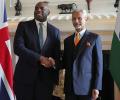
India's External Affairs Minister S Jaishankar has stated that the US administration under President Donald Trump is moving towards multipolarity, which aligns with India's interests. He also revealed that India and the US have reached an agreement on the need for a bilateral trade pact. Jaishankar touched upon various foreign policy issues including India's role in the Russia-Ukraine conflict, the trajectory of the BRICS grouping, and relations with China during a session at the Chatham House think-tank in London.
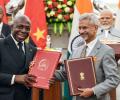
India's External Affairs Minister S Jaishankar has called on Europe to display sensitivity and mutuality of interest for deeper ties with India, stating that New Delhi seeks partners, not "preachers." Jaishankar emphasized the importance of "Russia realism" in India's foreign policy, highlighting the natural complementarity between India and Russia as a resource provider and consumer. He criticized attempts by the West to address the Russia-Ukraine conflict without Russia's involvement, arguing it "challenged the basics of realism." Jaishankar also stressed the importance of finding common ground with the US, suggesting that focusing on mutuality of interest rather than ideological differences is key to successful engagement.
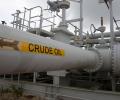
MEA spokesperson Randhir Jaiswal said India's energy decisions are guided by national interest.
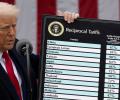
The impact of United States President Donald Trump's reciprocal tariffs is not yet known and New Delhi's strategy to deal with the situation is to firm up a bilateral trade pact with Washington, DC by fall of this year, External Affairs Minister S Jaishankar said on Wednesday.
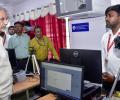
External Affairs Minister S Jaishankar said the 2008 Mumbai terror attack marked a turning point in relations with Pakistan when Indians collectively felt that such behaviour from a neighbouring country could no longer be tolerated. Speaking at Charotar University of Science and Technology, Jaishankar acknowledged India's transformation under Prime Minister Narendra Modi over the last decade, while Pakistan has remained unchanged, continuing with what he termed as its "bad habits."
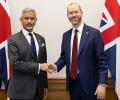
The UK has strongly condemned a security breach involving a pro-Khalistan extremist rushing towards External Affairs Minister S Jaishankar's convoy in London. The incident took place as Jaishankar was leaving the Chatham House think tank on Wednesday evening. The protester was swiftly taken aside by officers of the Metropolitan Police, with no arrests being confirmed so far. The UK said such attempts to "intimidate, threaten, or disrupt" public events are "completely unacceptable". The incident comes after Jaishankar's talks with UK Foreign Secretary David Lammy, during which both leaders covered the entire gamut of bilateral ties, including the relaunched Free Trade Agreement (FTA) negotiations, regional and global issues. The MEA has condemned the security breach and the provocative activities of the "small group of separatists and extremists", calling on the UK to "live up to their diplomatic obligations".
US Secretary of State Marco Rubio spoke separately with External Affairs Minister S Jaishankar and Pakistani Deputy Prime Minister and Foreign Minister Ishaq Dar, State Department Spokesperson Tammy Bruce said in a statement early Saturday.

'India is at a critical juncture in this century. I want to be a part of the diplomatic team that works to make India great.'

Lavrov's comments came two days after Russia accused the US of attempting to prevent India and other countries from buying Russian oil, saying Washington was using a wide range of 'coercive' measures, including tariffs, sanctions and direct prohibitions.

Israel and the United States had a plan. Iran punched back. And now the Gulf is reeling, the world is beginning to feel the pain and, as on date, no one in Washington or Tel Aviv appears willing to admit that the punch has landed, notes Prem Panicker, continuing his must-read blog on the war in the Middle East.
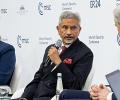
India's External Affairs Minister S Jaishankar countered a US senator's claim that democracy does not put food on the table, citing India's PMGKAY program which provides food to 800 million people. Jaishankar argued that different parts of the world have different experiences with democracy and that the model of globalization has contributed to issues with democracy in some regions. He emphasized that India's democratic system effectively delivers food security, highlighting the PMGKAY program as an example.

In a region increasingly shaped by competition and coercion, such collaboration strengthens security without confrontation, builds capacity without dependency and promotes order without domination, points out Dr Kumar.

Iran is fighting a different war: Older, slower, and in some ways more dangerous. Iran doesn't need to shoot down an F/A-18. It only needs to make the Strait of Hormuz feel dangerous long enough for insurance markets, shipping companies, and oil futures traders to do the rest. Prem Panicker continues his must-read daily blog on the war in the Middle East.

Prime Minister Narendra Modi is scheduled to visit Israel for two days to discuss bilateral and regional issues, marking his second visit to the Jewish state and highlighting the growing strategic partnership between India and Israel.

US Secretary of State Marco Rubio on Thursday spoke separately with External Affairs Minister S Jaishankar and Pakistani Prime Minister Muhammad Shehbaz Sharif, emphasising the need for de-escalation and reiterated his calls for Pakistan to take concrete steps to end any support for terrorist groups.

Fight on toward goals that keep receding, or exit with most objectives unmet. Trump is agitated, his poll numbers falling below the Plimsoll line, his base fractured between those who back the war and those who remember that he campaigned on ending them.
External Affairs Minister S Jaishankar will represent India at the inauguration of Donald Trump as the 47th President of the United States on January 20.
The external affairs minister said global norms and rules must be applied uniformly.
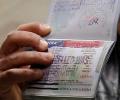
US lawmakers have expressed concerns that policies enacted by the Trump administration, such as the H1B visa fee and tariffs on India, are detrimental to American businesses and threaten the relationship between the United States and India.

Finance Minister Nirmala Sitharaman presented her ninth consecutive Union Budget, focusing on investments and growth. The speech was marked by its business-like approach and lack of cultural references, while opposition members raised concerns about regional representation.

Union Coal Minister G Kishan Reddy on Wednesday said the mortal remains of Nikitha Godishala, who was allegedly killed in the United States, are expected to be brought to the country on January 7 or 8.
"From President Trump's perspective, the one big shared enterprise that we have is the Quad, which is an understanding where everybody pays their fair share. There are no free riders involved. So that's a good model which works," he said. The Quad alliance consists of the US, India, Australia and Japan.
India's External Affairs Minister S Jaishankar, representing Prime Minister Narendra Modi, delivered a letter from Modi to US President Donald Trump at his inauguration on Monday. Jaishankar's presence at the inauguration is a common practice for India, sending special envoys to attend the swearing-in ceremonies of heads of state and government. The letter's content remains undisclosed.
India's External Affairs Minister S Jaishankar has expressed concern over information regarding USAID funding in India, calling it "concerning" and hinting at potential "bad faith" activities. Jaishankar asserted that India is looking into the matter and that the country should know who is involved in such activities. He also emphasized the need to expand India's security definition in the digital age, highlighting the influence of technology and narratives on public perception. The statements come amid controversy surrounding USAID funding for certain activities in India, with the US President Donald Trump questioning the agency's funding of voter turnout efforts.

Jaishankar said that Rahul Gandhi's lies damage India at an international level.

External Affairs Minister S Jaishankar conveyed the condolences of the people of India and the government to Tarique Rahman, Khaleda Zia's elder son.

The group waving separatist flags was barricaded and monitored by a significant police presence outside the venue on Wednesday night, with officers rushing to restrain the man as he ran past the barricade in an attempt to block the path of the minister's car pulling at an Indian flag.
Jaishankar said that India is a democratic society and gives nutrition support to 800 million people. He noted that there are parts where democracy is working well and there could be parts where it is not. However, he underscored that it is should not considered a universal phenomenon.

India and the US have agreed to a trade deal that will see Washington reduce reciprocal tariffs on Indian goods from 25% to 18%, according to US President Donald Trump. The deal also includes commitments from India to reduce tariffs and non-tariff barriers against the US and to increase purchases of American products.

'The BCB announced the schedule for India's tour of Bangladesh because there was a sense of positivity but now we need to get an official confirmation from the Indian board as to why Mustafizur's contract was cancelled.'
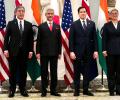
Soon after he was sworn in by Vice President J D Vance, US Secretary of State Marco Rubio hosted External Affairs Minister S Jaishankar, Penny Wong from Australia and Japan's Iwaya Takeshi for his first multilateral meeting as the top American diplomat.

Modi, who arrived in Kuala Lumpur on Saturday on a two-day visit, referred to the trade deals India agreed with various countries and said India is seen as a "trusted partner for growth".

'It is best to remain vigilant. Tarique Rahman arranged arms smuggling to Indian insurgent groups.' 'He has criticised India for sheltering Sheikh Hasina, but has also sought India's support.'
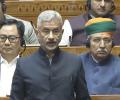
Jaishankar said India-China ties have been abnormal since 2020 when peace and tranquillity in border areas were disturbed due to Chinese actions.

The Indian government informed Parliament that India and the US are engaged in negotiations for a mutually beneficial multi-sectoral bilateral trade agreement. The two countries also cooperate on strategic, economic, and defense matters, managing divergences through high-level dialogues.

'He was really the legend of our times.' 'I couldn't have imagined that one day I'd be sharing a stage with him.'

Gandhi held up Naravane's unpublished "memoir" and said he would like the youngsters in India to know that this 'book' exists despite the government claiming otherwise.
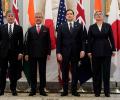
India has always been open to legitimate return of undocumented Indians to their country, External Affairs Minister S Jaishankar said on Wednesday, noting that New Delhi is still in the process of verifying those from the United States who can be deported to India and the number of such individuals cannot be determined yet.
